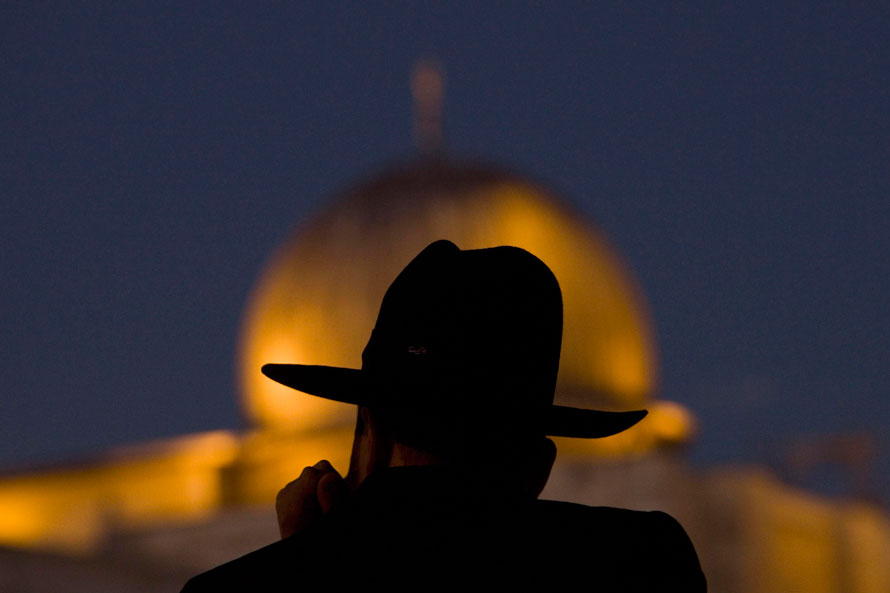
We often hear that a mosque in Jerusalem is Islam's third holiest place. Does it have any competitors?Also on Cyprus is another highly venerated islamic site - the third most important after Mecca and Medina - the Hala Sultan Tekke. This, too, has a black rock, said to have fallen as a meteorite as part of the tritholon over the shrine. The shrine is to a woman - the aunt and foster mother of Prophet Mohammed. Could this, like Mecca, have been originally a goddess shrine? Unfortunately no other clues are forthcoming.
- MSANEWS referencing 'Aphrodite's island', by Penny Drayton, Wood & water, Vol.2, No.41, Jan 1993. -
On the west side of the lake, resting peacefully among a copse of tall cypress trees, with its minarets reflect ed in the water, is the Tekke (shrine) of Hala Sultan built to honour a female relative of the Prophet Mohammed, Umm Haram, who accompanied the Arab invaders of Cyprus in 694AD, but died after falling from a mule near Larnaca. Her shrine, the third holiest in the Moslem world after Mecca and Medina, is today a wonderfully peaceful sanctuary planted with palm trees and flowering shrubs enjoyed by Cypriots and tourists alike.
- Larnaca Area tourist information on CosmosNet -
Shortly after his arrival, Hayel Srour visited the mosque of "Umm Haram" or the Tekke of Halan Sultan in Larnaca for prayers.
This tekke is one of holiest shrines of Islam. It was built in memory of Umm Haram, an aunt of Prophet Mohammed. She was buried on the spot near the Salt Lake, where she died after accidentally falling off her mule during one of the frequent Arab raids against Cyprus.
- from "Jordanian Speaker visits Cyprus", Cyprus News Agency: News in English (AM), 28-Jul-1997 -
On the divided mediterranean island of Cyprus, more than 12-hundred Turkish Cypriots have had a rare opportunity to make a pilgrimage to the Greek Cypriot sector, where one of Islam's holiest shrines is situated... it is at the Tekke mosque where an aunt of the Prophet Mohammed is said to be buried.
- Chris Drake, Voice of America, 31-Jan-98 -
On April 19, some 450 Turkish Cypriots crossed for the first time since 1974 to the free areas of the Republic for a pilgrimage to Hala Sultan Tekke Mosque in Larnaca, on the southeastern coast, on the occasion of the Muslim religion festival of Kurban Bayram. The Hala Sultan Tekke, located on the shore of Larnaca's Salt Lake, was built in memory of Umm Haram, an aunt of prophet Mohammet and is considered one of the holiest Islamic religious places. This visit was offered as a good will gesture on the part of the Cyprus government in the framework of the on-going proximity talks under UN auspices.
- Bulletin of the UNDP, April 30, 1997 -
Just how important is Jerusalem to Muslims?What about Islam's holy sites? There are none in Jerusalem.
Shocked? You should be. I don't expect you will ever hear this brutal truth from anyone else in the international media. It's just not politically correct.
I know what you're going to say: "Farah, the Al Aqsa Mosque and the Dome of the Rock in Jerusalem represent Islam's third most holy sites."
Not true. In fact, the Koran says nothing about Jerusalem. It mentions Mecca hundreds of times. It mentions Medina countless times. It never mentions Jerusalem. With good reason. There is no historical evidence to suggest Mohammed ever visited Jerusalem.
So how did Jerusalem become the third holiest site of Islam? Muslims today cite a vague passage in the Koran, the seventeenth Sura, entitled "The Night Journey." It relates that in a dream or a vision Mohammed was carried by night "from the sacred temple to the temple that is most remote, whose precinct we have blessed, that we might show him our signs. ..." In the seventh century, some Muslims identified the two temples mentioned in this verse as being in Mecca and Jerusalem. And that's as close as Islam's connection with Jerusalem gets -- myth, fantasy, wishful thinking. Meanwhile, Jews can trace their roots in Jerusalem back to the days of Abraham.
The latest round of violence in Israel erupted when Likud Party leader Ariel Sharon tried to visit the Temple Mount, the foundation of the Temple built by Solomon. It is the holiest site for Jews. Sharon and his entourage were met with stones and threats. I know what it's like. I've been there. Can you imagine what it is like for Jews to be threatened, stoned and physically kept out of the holiest site in Judaism?
- Joseph Farah, Arab-American journalist, - editor and CEO of WorldNetDaily -
This question would be easy to answer if someone would just count the number of times Jerusalem is mentioned in the Koran, the Scriptures, and the Torah. Unfortunately, such questions are rarely THAT easy to answer. Except in this case. It seems that Mohammed failed to forsee the struggle for Jerusalem, and thus failed to mention Jerusalem even once. That's right, Jerusalem is mentioned zero times in the Koran. For Jewish and Christian texts, Jerusalem is of course central.
Some call Jerusalem Islam's third holiest place precicely because Islam has only two holy places, Mecca and Medina; there are a number of holy shrines and mosques - any of these can rightly be called Islam's third holiest in that they are all tertiary. In fairness, some do think that the big rock on the Temple Mount was the place that Mohammed ascended to heaven, however to compare the importance to Muslims of this rock to the importance of the meteorite inside the Kaaba in Mecca, is a more recent political invention.
- the Society for Rational Peace -
In A.D. 691 Caliph Abd el-Malik commissioned the best architects to build the Dome of the Rock. His plan was based upon a Fourth Century Christian shrine on the Mount of Olives marking the site of Jesus' Ascension. The Caliph's new shrine was deliberately built as a political, economic, and religious counter attraction to Mecca. Medina and Mecca, the two cities holy to Islam, were under the control of a rival Caliph. Abd El-Malik sought to build up the importance of Jerusalem as an Islamic center for pilgrimage and worship. The holy spot of Judaism was now to be identified with the spot where Mohammed's horse ascended to heaven.
Another indication that Jerusalem was not considered of great importance to the Muslim armies is the fact that it was one of last cities taken by the Syrian Muslims after the death of Mohammed. It was conquered by a mediocre commander, and not by Omar himself. The Arabs first called the city Ilya (Aelia Capitolina) rather than Beit el-Maqdas (the holy house).
from Allah and the Temple Mount, by Lambert Dolphin
If I Forget Thee: Does Jerusalem Really Matter to Islam?by Daniel Pipes, editor of the Middle East Quarterly - [Originally appeared in slightly different form in The New Republic April 28, 1997]
The architects of the Oslo peace accords understood Jerusalem's power. Fearing that even discussing the holy city's future before less combustible issues are resolved would detonate the fragile truce between Israelis and Palestinians, they tried to delay this issue to the end. But they failed: riots met the opening a new entrance to an ancient tunnel last September and now the building of apartments on an empty plot in eastern Jerusalem has brought the negotiations to a halt. As it becomes clear that the struggle for Jerusalem will not wait, the outside world must confront the conflicting claims made by Jews and Muslims on the city that King David entered three millennia ago.
When they do, they will no doubt hear relativistic cliches to the effect that Jerusalem is "a city holy to both peoples," implying a parallel quality to the Jewish and Islamic claims to Jerusalem. But this is false. Jerusalem stands as the paramount religious city of Judaism, a place so holy that not just its soil but even its air is deemed sacred. Jews pray in its direction, mention its name constantly in prayers, close the Passover service with the wistful statement "Next year in Jerusalem," and recall the city in the blessing at the end of meals.
What about Jerusalem's role in Islam? Its significance pales next to Mecca and Medina, the twin cities where Muhammad lived and which hosted the great events of Islamic history. Jerusalem is not the place to which Muslims pray, it is not once mentioned by name in the Qur'an or in prayers, and it is directly connected to no events in Muhammad's life. The city never became a cultural center and it never served as capital of a sovereign Muslim state. Jerusalem has mattered to Muslims only intermittently over the past 13 centuries, and when it has mattered, as it does today, it has done so because of politics. Conversely, when the utility of Jerusalem expires, the passions abate and its status declines.
In A.D. 622, the Prophet Muhammad fled his home town of Mecca for Medina, a city with a substantial Jewish population. On arrival, if not earlier, he adopted a number of practices friendly to Jews, such as a Yom Kippur-like fast, a synagogue-like house of prayer, and kosher-style dietary laws. Muhammad also adopted the Judaic practice of facing the Temple Mount in Jerusalem during prayer; "He chose the Holy House in Jerusalem in order that the People of the Book [i.e., Jews] would be conciliated," notes At-Tabari, an early Muslim commentator on the Qur'an, "and the Jews were glad." Modern historians agree: W. Montgomery Watt, a leading biographer of Muhammad, interprets the prophet's "far-reaching concessions to Jewish feeling" as part of his "desire for a reconciliation with the Jews."
But Jews criticized the new faith and rejected Muhammad's gestures, leading Muhammad to eventually break with them, probably in early 624. The most dramatic sign of this change came in a Qur'anic passage (2:142-52) ordering the faithful no longer to pray toward Syria but toward Mecca instead. (The Qur'an and other sources only mention the direction as "Syria"; other information makes it clear that "Syria" means Jerusalem.)
This episode initiated a pattern that would be repeated many times over the succeeding centuries: Muslims take religious interest in Jerusalem because it serves them politically and when the political climate changes, their interest flags.
In the century after Muhammad's death, politics prompted the Damascus-based Umayyad dynasty, which controlled Jerusalem, to make this city sacred in Islam. Embroiled in fierce competition with a dissident leader in Mecca, the Umayyad rulers sought to diminish Arabia at Jerusalem's expense. They sponsored a genre of literature praising the "virtues of Jerusalem" and circulated accounts of the prophet's sayings or doings (called hadiths) favorable to Jerusalem. In 688-91, they built Islam's first grand structure, the Dome of the Rock, on top of the remains of the Jewish Temple.
In a particularly subtle and complex step, they even reinterpreted the Qur'an to make room for Jerusalem. The Qur'an, describing Muhammad's Night Journey (isra'), reads: "[God] takes His servant [i.e., Muhammad] by night from the Sacred Mosque to the furthest mosque." When this Qur'anic passage was first revealed, in about 621, a place called the Sacred Mosque already existed in Mecca. In contrast, the "furthest mosque" was a turn of phrase, not a place. Some early Muslims understood it as metaphorical or as a place in heaven. And if the "furthest mosque" did exist on earth, Palestine would have seemed an unlikely location, for that region elsewhere in the Qur'an (30:1) was called "the closest land" (adna al-ard).
But in 715, the Umayyads built a mosque in Jerusalem, again right on the Temple Mount, and called it the Furthest Mosque (al-masjid al-aqsa, or Al-Aqsa Mosque). With this, the Umayyads not only post hoc inserted Jerusalem into the Qur'an but retroactively gave it a prominent role in Muhammad's life. For if the "furthest mosque" is in Jerusalem, then Muhammad's Night Journey and his subsequent ascension to heaven (mi`raj) also took place on the Temple Mount.
But, as ever, Jerusalem mattered theologically only when it mattered politically, and when the Umayyad dynasty collapsed in 750, Jerusalem fell into near-obscurity. For the next three and a half centuries, books praising the city lost favor and the construction of glorious buildings not only stopped, but existing ones fell apart (the Dome over the rock collapsed in 1016). "Learned men are few, and the Christians numerous," bemoaned a tenth-century Muslim native of Jerusalem. The rulers of the new dynasty bled Jerusalem and its region country through what F. E. Peters of New York University calls "their rapacity and their careless indifference."
By the early tenth century, notes Peters, Muslim rule over Jerusalem had an "almost casual" quality with "no particular political significance." In keeping with this near-indifference, the Crusader conquest of the city in 1099 initially aroused a mild Muslim response: "one does not detect either shock or a sense of religious loss and humiliation," notes Emmanuel Sivan of the Hebrew University, a scholar of this era.
Only as the effort to retake Jerusalem grew serious in about 1150 did Muslim leaders stress Jerusalem's importance to Islam. Once again, hadiths about Jerusalem's sanctity and books about the "virtues of Jerusalem" appeared. One hadith put words into the Prophet Muhammad's mouth saying that, after his own death, Jerusalem's falling to the infidels is the second greatest catastrophe facing Islam.
Once safely back in Muslim hands after Saladin's reconquest, however, interest in Jerusalem dropped, to the point where one of Saladin's grandsons temporarily ceded the city in 1229 to Emperor Friedrich II in return for the German's promise of military aid against his brother, a rival king. But learning that Jerusalem was back in Christian hands again provoked intense Muslim emotions; as a result, in 1244, the city was again under Muslim rule. The psychology at work here bears note: that Christian knights traveled from distant lands to make Jerusalem their capital made the city more valuable in Muslim eyes too. "It was a city strongly coveted by the enemies of the faith, and thus became, in a sort of mirror-image syndrome, dear to Muslim hearts," Sivan explains.
The city then lapsed back to its usual obscurity for nearly eight centuries. At one point, the city's entire population amounted to a miserable four thousand souls. The Temple Mount sanctuaries were abandoned and became dilapidated. Under Ottoman rule (1516-1917), Jerusalem suffered the indignity of being treated as a tax farm for non-resident, one-year (and so very rapacious) officials. The Turkish authorities raised funds by gouging European visitors, and so made little effort to promote Jerusalem's economy. The tax rolls show soap as the city's only export item. In 1611, George Sandys found that "Much lies waste; the old buildings (except a few) all ruined, the new contemptible." Gustav Flaubert of Madame Bovary fame visited in 1850 and found "Ruins everywhere." Mark Twain in 1867 wrote that Jerusalem "has lost all its ancient grandeur, and is become a pauper village."
In modern times, notes the Israeli scholar Hava Lazarus-Yafeh, Jerusalem "became the focus of religious and political Arab activity only at the beginning of the present century, and only because of the renewed Jewish activity in the city and Judaism's claims on the Western Wailing Wall." British rule over city, lasting from 1917 to 1948, further galvanized Muslim passion for Jerusalem. The Palestinian leader (and mufti of Jerusalem) Hajj Amin al-Husayni made the Temple Mount central to his anti-Zionist efforts, for example raising funds throughout the Arab world for the restoration of the Dome of the Rock. Arab politicians made Jerusalem a prominent destination; for example, Iraqi leaders frequently turned up, where they demonstrably prayed at Al-Aqsa and gave rousing speeches.
But when Muslims retook the Old City with its Islamic sanctuaries in 1948, they quickly lost interest in it. An initial excitement stirred when the Jordanian forces took the walled city in 1948_as evidenced by the Coptic bishop's crowning King `Abdallah as "King of Jerusalem" in November of that year_but then the usual ennui set in. The Hashemites had little affection for Jerusalem, where some of their most devoted enemies lived and where `Abdallah himself was shot dead in 1951. In fact, the Hashemites made a concerted effort to diminish the holy city's importance in favor of their capital, Amman. Jerusalem had served as the British administrative capital, but now all government offices there (save tourism) were shut down. The Jordanians also closed some local institutions (e.g., the Arab Higher Committee) and moved others to Amman (the treasury of the Palestinian waqf, or religious endowment).
Their effort succeeded. Once again, Arab Jerusalem became an isolated provincial town, now even less important than Nablus. The economy stagnated and many thousands left Arab Jerusalem. While the population of Amman increased five-fold in the period 1948-67, Jerusalem's grew just 50 percent. Amman was chosen as the site of the country's first university as well as of the royal family's many residences. Perhaps most insulting of all, Jordanian radio broadcast the Friday prayers not from Al-Aqsa Mosque but from a mosque in Amman.
Nor was Jordan alone in ignoring Jerusalem; the city virtually disappeared from the Arab diplomatic map. No foreign Arab leader came to Jerusalem between 1948 and 1967, and even King Husayn visited only rarely.
King Faysal of Saudi Arabia often spoke after 1967 of yearning to pray in Jerusalem, yet he appears never to have bothered to pray there when he had the chance. Perhaps most remarkable is that the PLO's founding document, the Palestinian National Covenant of 1964, does not even once mention Jerusalem.
All this abruptly changed after June 1967, when the Old City came under Israeli control. As in the British period, Palestinians again made Jerusalem the centerpiece of their political program. Pictures of the Dome of the Rock turned up everywhere, from Yasir Arafat's office to the corner grocery. The PLO's 1968 Constitution described Jerusalem as "the seat of the Palestine Liberation Organization."
Nor were Palestinians alone in their renewed interest. "As during the era of the Crusaders," Lazarus-Yafeh points out, many Muslim leaders "began again to emphasize the sanctity of Jerusalem in Islamic tradition," even dusting off old hadiths to back up their claims. Jerusalem became a mainstay of Arab League and United Nations resolutions. The formerly stingy Jordanian and Saudi governments now gave munificently to the Jerusalem waqf.
As it was under the British mandate, Jerusalem has since 1967 again become the primary vehicle for mobilizing international Muslim opinion. A fire at Al-Aqsa Mosque in 1969 gave Faysal the occasion to convene twenty-five Muslim heads of state and establish the Organization of the Islamic Conference, a United Nations for Muslims. Lebanon's leading Shi`i authority regularly relies on the theme of liberating Jerusalem to inspire his own people to liberate Lebanon. Since the Islamic Revolution, Iran's 1-rial coin and 1000-rial banknote have featured the Dome of the Rock. Iranian soldiers at war with Saddam Husayn's forces in the 1980s received primitive maps marking a path through Iraq and onto Jerusalem. Ayatollah Khomeini decreed the last Friday of Ramadan as Jerusalem Day, and the holiday has served as a major occasion for anti-Israel harangues.
Since Israeli occupation, some ideologues have sought to establish the historical basis of Islamic attachment to Jerusalem by raising three main arguments, all of them historically dubious. First, they assert a Muslim connection to Jerusalem that predates the Jewish one. Ghada Talhami, a scholar at Lake Forest College, typically asserts that "There are other holy cities in Islam, but Jerusalem holds a special place in the hearts and minds of Muslims because its fate has always been intertwined with theirs."
Always? Jerusalem's founding antedated Islam by about two millennia, so how can that be? Ibrahim Hooper, national communications director for the Washington-based Council on American-Islamic Relations explains: "the Muslim attachment to Jerusalem does not begin with the prophet Muhammad, it begins with the prophets Abraham, David, Solomon and Jesus, who are also prophets in Islam." In other words, the central figures of Judaism and Christianity were really proto-Muslims.
Second, and equally anachronistic, is the claim that the Qur'an mentions Jerusalem. Hooper (and others) argue that "the Koran refers to Jerusalem by its Islamic centerpiece, al-Aqsa Mosque." But this makes no sense: a mosque built a century after the Qur'an was delivered cannot establish what a Qur'anic verse originally meant.
Third, some Muslims deny Jerusalem any importance to Jews. `Abd al- Malik Dahamshe, an Arab member of Israel's parliament, flatly stated last month that "the Western Wall is not associated with the remains of the Jewish Temple." A fundamentalist Israel Arab leader went further and announced that "It's prohibited for Jews to pray at the Western Wall." Or, in the succinct wording of a protest banner: "Jerusalem is Arab."
Despite these deafening claims that Jerusalem is essential to Islam, the religion does contain a recessive but persistent strain of anti-Jerusalem sentiment. Perhaps the most prominent adherent of this view was Ibn Taymiya (1263-1328), one of Islam's strictest and most influential religious thinkers. (The Wahhabis of Arabia are his modern-day successors.)
In an attempt to purify Islam of accretions and impieties, Ibn Taymiya dismissed the sacredness of Jerusalem as a notion deriving from Jews and Christians, and from the long-ago Umayyad rivalry with Mecca. More broadly, learned Muslims living in the years following the Crusades knew that the great publicity given to hadiths extolling Jerusalem's sanctity resulted from the Countercrusade-that is, from political exigency-and treated it warily.
Recalling that God once had Muslims direct their prayers toward Jerusalem and then turned them instead toward Mecca, some early hadiths suggested that Muslims specifically pray with away from Jerusalem, a rejection that still survives in vestigial form; he who prays in Al-Aqsa Mosque not coincidentally shows his back precisely to the Temple area toward which Jews pray.
In Jerusalem, theological and historical claims matter, serving as the functional equivalent of legal documents elsewhere. Whoever can establish a deeper and more lasting association with the city has a better chance of winning international support to rule it. In this context, the fact that politics has so long fueled the Muslim attachment to Jerusalem has two implications. First, it points to the relative weakness of the Islamic connection to the city, one that arises as much from transitory considerations of mundane need as from the immutable claims of faith.
Second, it suggests that the Muslim interest lies not so much in controlling Jerusalem as it does in denying control over the city to anyone else. Jerusalem will never be more than a secondary city for Muslims.
In contrast, Mecca is the eternal city of Islam, the place where Muslims believe Abraham nearly sacrificed Isaac's brother Ishmael and toward which Muslims turn to pray five times each day. Non-Muslims are strictly forbidden there, so it has a purely Muslim population. Mecca evokes in Muslims a feeling similar to that of Jerusalem among Jews: "Its very mention reverberates awe in Muslims' hearts," writes Abad Ahmad of the Islamic Society of Central Jersey. Very roughly speaking, what Jerusalem is to Jews, Mecca is to the Muslims. And just as Muslims rule an undivided Mecca, so Jews should rule an undivided Jerusalem.
Daniel Pipes is editor of the Middle East Quarterly and author of The Hidden Hand: Middle East Fears of Conspiracy (St. Martin's Press).
What is the significance of Jerusalem to Jews?"Mecca is holy to Moslems, and Jerusalem to the Jews."
- Yakut, the 13th-century Arab biographer and geographer -
I did not enter on my own the city of Jerusalem. Streams of endless craving, clinging, dreaming, flowing day and night, midnights, years, decades, centuries, millennia, streams of tears, of pledging, of waitings-from all over the world, from all corners of the world-carried us of this generation to the Wall.
- Abraham Joshua Heschel -
We do not mourn properly over Jerusalem. Were we guilty of this transgression alone, it would be sufficient reason for the extension of the period of our Exile. In my opinion this is the most likely, most apparent and the strongest reason for all of the dreadful terrifying persecutions which have been fallen us in Exile, in all the places of our dispersion. We have been hotly pursued. We have not been granted rest among the nations with our humiliation, affliction and homelessness, because this sense of mourning has left our hearts. While becoming complacent in a land not ours, we have forgotten Jerusalem; we have not taken it to heart. Therefore, "Like one who is dead we have been forgotten," from generation to generation sorrow is added to our sorrow and our pain.
- Jacob Emden, an 18th century rabbi, quoted by Arthur Herzberg, editor, Judaism, George Braziller, Inc. New York, 1961, pp. 163-164 -
One must weep ceaselessly over the rebuilding of Jerusalem and the restoration of the glory of King David, for that is the object of human perfection. If we do not have Jerusalem and the kingdom of the House of David, why should we have life? . . . Since our many transgressions have led to the Destruction and to the desolation of our glorious Temple and the loss of the kingdom of the House of David, the degree which we suffer the absence and the lack of good is known to all. Surely have we descended from life until death. And the converse is also true: "When the Lord restores the captivity of Zion," we shall ascend from death unto life. Certainly the heart of anyone who possesses the soul of a Jew is broken when he recalls the destruction of Jerusalem.
- Jonathan Eibschutz, another 18th century rabbi, quoted as above. -
Through a historical catastrophe - the destruction of Jerusalem by the emperor of Rome - I was born in one of the cities in the diaspora. But I always deemed myself a child of Jerusalem, one who is in reality a native of Jerusalem.
- S.J. Agnon, upon receiving the Nobel Prize for Literature, 1966 [from Jsource] -
Not living in Jerusalem, I always feel a special thrill when I come into the capital.
I am continually overwhelmed by the uniqueness of this special, holy place, and I am reminded of the famous Talmudic adage that, "Ten measures of beauty descended upon the world, and Jerusalem took nine of them."
I love to walk through the streets and neighborhoods of the city, where ancient history and modern skyscrapers blend together in wondrous harmony, where people of every background and persuasion meet, greet and eat. One of my favorite stops has always been the Mahaneh Yehuda market. There one can see not only the vibrancy of a population bursting with energy, but also the bounty of the Land of Israel.
j This place, to me, is the epitome of the ancient prophecy that foretells the imminent Redemption, "when the fields of Israel begin to bloom again." There, amid the watermelons and tomatoes, the onions and oranges, one can smell, taste and feel the reincarnation of this age-old nation, long-dormant but in full bloom again. Jerusalem brims with important historic and religious sites. But this is the first place I take visitors from abroad when I want to show off my beautiful, fruitful country.
- Stewart Weiss, director of the Jewish Outreach Center in Ra'anana -
"three of the greatest achievements of my life are connected to Jerusalem. I was the commander of the forces that saved Western Jerusalem in 1948, the Chief of Staff of the army that liberated Eastern Jerusalem in 1967 and will be the Prime Minister of Israel when this legislation will mandate the long overdue recognition of Jerusalem as our eternal capital."
- Yitzhak Rabin, Washington D.C., October 25, 1995 -
"For Christians and Moslems, the term 'Holy Sites' is an adequate expression of what matters. Here [in Jerusalem] are sacred places hallowed by most holy events... But Judaism... is not tied to sites, but to the land; not to what happened in Jerusalem, but to Jerusalem itself"
- Bishop Prof. Krister Stendahl, Harvard Divinity Bulletin, Autumn 1967 -
The Arabs argue that Israel has no claim on Jerusalem beyond power politics. Yet, Jerusalem has long been a Jewish city, and calling for an end to Israel's sovereignty over an undivided Jerusalem is simply a call for an end to Israel. When, in 1947, the United Nations called for an international (UN-administered) city, it was not the Jews - but the Arabs - who refused. When the Jordanian army seized the Old City during its war of aggression against Israel in 1948, it promptly desecrated all Jewish holy sites in the area, turned Jewish cemeteries and synagogues into urinals and murdered all Jews who remained on the Jordanian side of the 1948 armistice line. During the 1967 War, Jordan's King Hussein - a celebrated man of peace to Israel's Oslo supporters - spoke as follows on Radio Amman: "Kill the Jews wherever you find them. Kill them with your arms, with your hands, with your nails and teeth." Of course, Jordanian control over East Jerusalem from 1949 - 1967 was entirely unacceptable under international law from the standpoints of both the Arab kingdom's method of acquisition and its brutal methods of occupation. Do Israel's Oslo supporters object to these earlier and egregious violations of international law by the Kingdom of Jordan? If they do, they certainly haven't mentioned them.
The statement that Jerusalem is holy to the three monotheistic religions is now generally taken as self-evident. Yet, for Muslims, even for those who regard the city as theirs because of Canaanite origins, it is not Jerusalem, but the Saudi Arabian city of Mecca, that is paramount. It is Mecca, not Jerusalem, to which Muslims must pilgrimage at least once. For Christians, Jerusalem contains some, but not all, of their holiest shrines. For Jews, all main holy sites are within the post-1967 Jerusalem municipal borders or in very close proximity.
Jews at prayer anywhere in the world face towards the Temple Mount in Jerusalem. Muslims, even those praying on the Mount, face away from it, towards Mecca. When they pray on the Mount, Muslims have their backs toward the Dome of the Rock, while those praying in the Al-Aqsa mosque also look away from Jerusalem and toward Mecca. In the Hebrew bible, Jerusalem is mentioned 656 times; Jerusalem's well-being is central to all Jewish prayer. In the Koran, Jerusalem is never mentioned, not even once. With the brief exception of the Crusader period, no conqueror of Jerusalem made the city a capital. Driven into exile by Nebuchadnezzar in 586 B.C.E., the Jews returned fifty years later and rebuilt Jerusalem as their capital. It was the capital of the Jews, again, under the Maccabees.
The rights of both Jews and Christians were trampled on by the Muslim conquerors of Jerusalem. Churches were made into mosques. Slaughterhouses were deliberately established near Jewish places of worship. Mosques were built next to churches and synagogues so that their minarets could literally overtower them.
In the 2554 years between 587 B.C.E. and 1967 C.E. Jerusalem was conquered more than twenty times, and as part of many empires, was ruled from different and distant capital cities. Only for the Jews (for more than 650 years), for the Crusaders (for 188 years) and for the State of Israel (since 1949) has Jerusalem served as a capital city.
- Louis Rene Beres - Professor of International Law - Department of Political Science - Purdue University -
So why do the Arabs claim that Jerusalem is significant to them? Does it have anything to do with the significance Jerusalem has for the Jews?On a February day in the year A.D. 638 the Caliph Omar entered Jerusalem, riding upon a white camel. He was dressed in worn, filthy robes, and the army that followed him was rough and unkempt; but its discipline was perfect. At his side was the Patriarch Sophronius, as chief magistrate of the surrendered city. Omar rode straight to the site of the Temple of Solomon, whence his friend Mahomet had ascended into heaven.
- Steve Runciman, A History of The Crusades. Volume One: The First Crusade, Cambridge University Press, 1951 -
After the capitulation of Jerusalem to 'Omar in 635 (A.H 14), that Khalif caused a mosque to be built on what was considered to be the ancient site of the Temple (or Masjid) of David. The traditional position of this site, 'Omar (as it is stated) verified, by the re-discovery of the Rock concealed under a dunghill from the description that had been given to him, 'Omar, by the Prophet, of the place where he had made his prayer prostrations in Jerusalem on the occasion of his Night-Journey.
- Guy Le Strange, History of Jerusalem Under the Muslims, (From A.D. 650 to 1500), 1890 -
"... The Al-Buraq [Wailing] Wall belongs to the Muslims alone. This is not my personal view, but rather, that of Islam."
- Sheikh Sabri (Voice of Palestine, June 12, translated by MEMRI). The Wailing or Western Wall, a Herodian retaining wall of the Temple Mount, predates the birth of Islam by several centuries.
I often hear accusations that Israel is 'Judaizing' Jerusalem. Are the Jews a majority in Jerusalem, and is this a contemporary phenomenon?"The sedentary population of Jerusalem numbers about 15,500 souls, of whom 4,000 are Mussulmans [Muslims] and 8,000 Jews. ...[the] Mussulmans, forming about a fourth of the population [are not a uniform group, as they are] consisting of Turks, Arabs and Moors."
- Karl Marx, 1854, quoted in Karl Marx and Jerusalem, by Shlomo Avineri, The Jerusalem Post, Sept 4 2000 -
"What is the population at present?" asked Will.
"It is variously estimated," said Mr. Crunden. "No accurate census has been taken, and we have to estimate. Ten years ago it was placed at from 25,000 to 30,000. The Episcopal Bishop of Jerusalem now estimates it at from 50,000 to 60,000. It has increased rapidly of late years."
"Are the most of these Mohammedans?""No. The majority are Jews. The Mohammedans are next in number. There are, however, perhaps 10,000 Christians, mostly Greeks, though there are many Roman Catholics, several hundred Armenians, and some Protestants."
- by B. W. Johnson, in Young Folks in Bible Lands: Chapter X, 1892 -
What is the status of Jerusalem in the Peace Talks?
Shouldn't the Jews just give the place to the Arabs if the Arabs promise Peace?"[The Arab] claim to lost fields cannot be elevated to national status. They should not inherit Jerusalem for the same reason that Jews failed to inherit Baghdad: Jerusalem stands for Jewish ideas and Baghdad for Arab ideas."
- Avi Erlich, "Ancient Zionism" -
"the search for peace can only be hindered by raising utterly unrealistic hopes about the future of Jerusalem among the Palestinians and understandable fears among the Israeli population that their capital city may once again be divided by cinder block and barbed wire."
- SENATOR DANIEL PATRICK MOYNIHAN (D-NY) and 91 other members of the Senate, March, 1995 -
Jerusalem: A City UndividedBy Congressman Jim Saxton (R-NJ-03) - Chairman, House Task Force on Terrorism & Unconventional Warfare -
During the Six Day War in 1967, the Israeli Defense Forces confronted four Arab armies simultaneously: the Lebanese Army in north, Syrians and Jordanians in the east and the Egyptians in the south. The Israeli forces, under the commands of General Moshe Dayan and General Yitzhak Rabin, not only defeated the multiple armies, but they captured Judea and Samaria (the so-called "West Bank"), the Golan Heights, the Sinai Peninsula and the Gaza Strip. They also established a security zone in Southern Lebanon to thwart the Arab terrorist groups from infiltrating and shelling northern Israel.
However, the most significant event of the Six Day War was the capture of Jordanian-ruled eastern Jerusalem and the Western Wall by Israeli Paratroopers. The Western Wall, a remain of the Second Jewish Temple, is the holiest site on earth in the Jewish religion.
When Israeli forces liberated eastern Jerusalem exactly thirty years ago this June 7th, a 1,900 year old yearning to regain control of their holy capital finally came true for the Jewish people. For 3,000 years, since King David declared it Judaism's eternal capital, Jerusalem has been the focal point of the Jewish people. The name of Jerusalem appears over 600 times in the Torah, Judaism's holiest book. And Jews around the world face Jerusalem to pray three times a day. It is often said that no other people on earth have such reverence for a single city than the Jews have for Jerusalem.
It is therefore discouraging that some have taken the position that Jerusalem should be redivided into "Eastern/Arab" and "Western/Jewish" halves. By using the term "Arab East Jerusalem", some media outlets have misled the American people about the reality of Jerusalem's demographic and political status. First, the eastern section of Jerusalem formerly occupied by the Jordanians is presently majority Jewish. Second, there is also no such place as "East Jerusalem". Jerusalem is one city, reunited and under one Israeli rule. It is as ridiculous as if one were to say they lived in "Chinese South New York" if they lived in Manhattan's Chinatown.
Moreover, the Jews of the Old City did not voluntarily leave eastern Jerusalem, but were driven out or killed by Jordanian forces in Israel's 1948 War of Independence. During nineteen years of Jordanian occupation, Jordan had so little interest in Jerusalem that it neglected to provide the city with even the most basic municipal services, including electricity, plumbing, health care, or running water. And not a single Arab leader visited Jerusalem during those nineteen years. In fact, during the centuries of Muslim rule of the city, Jerusalem was never made into a regional or provincial capital, and no major institute of Islamic study was ever established there. In addition, Jordan had no respect for the sanctity of the holy sites in the city. For example, prior to Jordanian occupation, there were 58 synagogues in the Old City. All of these synagogues were systematically destroyed by the Jordanian Army. The Jordanians went so far as to tear up the ancient Jewish cemetery on the Mount of Olives, using the tombstones (including the tombstone of Hadassah founder Henrietta Szold) to pave roads and build latrines in Jordanian Army barracks. It goes without saying that Jews and Christians were completely denied access to their holy sites.
Jews have inhabited Jerusalem, uninterrupted, for 3,000 years, far longer than any other people. Since Jewish rule in the city, Jerusalem has been open to all faiths, holy sites of Christianity and Islam are protected, and the right to worship is maintained. For these reasons, I I am opposed to any "redivision" of Jerusalem. Rather, it is my hope that all of Jerusalem will remain, peacefully, in Israeli hands for at least the next 3,000 years.
England, of course knew of the Holocaust and mass killings in 1941 as well as all the discriminations, theft, sterilizations, Euthansaia killings, medical experiments and concentration camp murders that began in 1933 and did nothing about any of it. Nor would they bomb the camps railway systems to save Jews or allow them to emigrate to Palestine or anywhere else. After the war, Jews were again put in British concentration camps to prevent entry to Israel, and the British along with the Vatican took Nazi gold, and allowed the murderers to escape; allowed the slave labor companies who worked to death 14millions or led to the gas chambers, not to have to pay any penalties or compensate survivors. And Britian has until last year negated any relationship to the Holocaust. Then a conference on Nazi gold and an offer of a few $millions as part of a fund. Yet Britian is leading the charge to divide Jerusalem, as well as the Vatican, whose bank helped fund Hitler and this Vatican helped the murderers to escape and this Vatican sits on $millions of Jewish Torahs, holybooks and artifacts to this day that was stolen and nothing returned to the Jewish community ,while making a half-hearted, too little too ,late statement on its role in the Holocaust, while ignoring its role with a Catholic Hitler.
Today over 50,000 New Nazi attacks in Germany alone since runification in 1990 and nothing from our leaders. Meanwhile the deathcamps in Germany are experiencing the same outrage as at Auschwitz and not a word from our leaders, while the very same countries mum aout the Holocaust and their role in it, are the very ones supporting a murderer like Arafat to have his state still committed to the destruction of the Jews, with Jerusalem as its capitol.
Of course, no Jew says to Arafat to give up Mecca for Peace, but to lose Jerusalem, like Auschwitz is no Big Deal anymore than the Holocaust was any Big Deal to them either. With supposed "Peace" comes "Prosperity" and their only definition is the' bank accounts 'to begin with.
It's amazing to watch the Palestinians fight for sand and then watch todays Jews ignoring completely exactly why Jews were persecuted and murdered to be 'next year in Jerusalem'.
- Bob Kunst, Shalom International -
The very nations that have criticized Israel for reunifying Jerusalem and who demand internationalization of the city would never permit any such decision or denial of sovereignty with respect to their own historic capitals.
- by A. Roy and Alice Eckardt in "AGAIN, SILENCE IN THE CHURCHES", The Christian Century, August 2, 1967 -
What has been the Arab policy regarding access by Christians and Jews to sites which Muslims consider holy?They have always been much averse to having Christians visit their holy places. Up to this time no one has visited Mecca or Medina unless he was in disguise and passed himself off as a Mohammedan. For a long time Christians were not allowed to visit the "Harem Esh Sheriff," and still they refuse to all them to enter the mosque at Hebron which stands over the Cave of Macpelah. where Abraham and the patriarchs were buried. But the pressure of the European powers has forced the Turks to give orders to admit visitors, under certain restrictions, to the site of the Temple. We found it necessary to secure permission to make this visit through the U.S. Consul, and to go under the protection of an officer sent from his office, called a Cavass.
- by B. W. Johnson, in Young Folks in Bible Lands: Chapter X, 1892 -
The Arabs occupied part of Jerusalem for 19 years between 1948 and 1967. Wasn't this the only time when all peoples and all faiths had free access to their holy sites, which were respected by the authorities at the time?
In 1990, liturgical church leaders in Jerusalem remarked that "the integrity, cultural and religious autonomy of the Christian, Armenian and Moslem Quarters of the Holy City" had been "honored by all previous rulers of Jerusalem". History reveals that it was terrible for the Jews and not at all good for Christians under Jordanian Moslem rule. The church leaders did not mention the integrity of the Jewish quarter, because it was destroyed. After 1948, the Jordanians attempted to obliterate the Jewish presence and signs of Jewish identity from the Old City, including the destruction of 53 synagogues along with Jewish academies and libraries. They built a road through the Jewish cemetery on the Mount of Olives, and used Jewish gravestones as paving material and lavatory seats in Jordanian camps. The Jordanians even evicted the Jewish residents of the Old City and subsequently prevented Jews and Israeli Moslems from entering the Old City to pray at their respective holy sites. As for the Christians, in 1965, a Jordanian ordinance was enacted curtailing the further acquisition of land or property by Christian institutions in Jerusalem. Prior to this, Christian schools had to be closed on Fridays (the Moslem holy day), and they were required to have their Christian students taught the Koran by Moslem teachers. Mosques were built next to churches to prevent the expansion of the Christian churches. Even the members of the Order of the Church of the Holy Sepulcher were ordered to become Jordanian citizens in a law passed in 1958, although they had maintained their Greek citizenship since the Order was founded in the 5th century.
Thousands of Jews lived in what Arab spokesmen now call "traditionally Arab East Jerusalem" until Israel's independence in 1948. Actually, "East Jerusalem" only existed for 19 years, from 1948-1967, when Jordan saw to it that the part of the Holy City under their control stayed Judenrein, including the Western Wall. Of course, Jerusalem cannot be viewed from a purely prosaic statistical vantage point, or merely in the modern context. The city's meaning for mankind goes back 3,000 years to King David, who made it Israel's capital. Its influence radiated worldwide on religion, civilization, culture and history.
As part of Israel and Judea, it was home to kings, priests and prophets, warriors, poets and the sages of the Sanhedrin.
The Roman writer Pliny the Elder described Jerusalem in Second Temple times as, "the most illustrious city of the East by far, not merely of Judea".
Jerusalem particularly influenced both Christianity and Islam. Jesus was a Jew preaching to Jews in Jerusalem. Scriptures revered by Christians refer to the sanctity of Jerusalem in a Jewish context.
This is less well known for Islam; yet, Mohammed originally ordained prayer in the direction of Jerusalem. He subsequently changed it to Mecca, separating his new faith from Judaism.
After the Arab-Moslem conquest, Moslems absorbed many Jewish traditions relating to Jerusalem and the Temple (mentioned in the Koran 17:7). The usual Arab names for the city today, al-Kuds and Bayt al-Makdis, derive from Jewish tradition. They are adaptations of the Hebrew names Hakodesh and Beit Hamikdash, referring to holiness, the Temple, and Jerusalem.
Jerusalem is thus essentially Jewish, both in its meaning for world history and on the mundane, numerical plane. Even "East Jerusalem" now has a Jewish majority. BUT the fact of Jewish residence throughout the city before 1948 has been obscured since then. Before 1914, Jews lived in various quarters of the Old City, and outside the walls, both "east" and "west". Jewish homes clustered around Simon's Tomb north of Orient House, and the American Colony Hotel. The Eshel Abraham neighborhood faced Damascus Gate. Other Jews lived in Silwan and on the Mount of Olives.
However, under British rule Arab pogroms drove Jews out of Eshel Abraham (1929), Silwan (1929, 1938), and the Old City quarters other than the Jewish Quarter (1920, 1929, 1936-38). Arabs performed "ethnic cleansing" with British acquiescence, in 1938 driving Jews out of Batei Sham'a (today the Cinematheque) and the Beit Yosef quarter (1929).
Whereas the latter two areas came under Israeli control in 1948, Arabs drove all Jews out of Arab-occupied areas (the Jewish Quarter, Neveh Ya'acov, the neighborhood of Simon's Tomb). Jews were forbidden to live anywhere in Jordan.
Marx wrote that "Turks, Arabs, and Moors" were about a fourth of the city's population, but "masters in every respect". Judging by statements made by Arab leaders, it seems some Moslems want to rule here again, despite their minority status. Curiously, some Christians support them.
Perhaps they think like Jerome, the Church Father, who wrote about the Jews of his time who were not allowed to reside in Jerusalem and came to lament its ruins: "The children of this wretched nation... are not worthy of compassion".
- Jerusalem Post 1997 -
Are the Arabs more tolerant now about the sacred places of other people?"Just as Jews can't come to the Ka'aba in Mecca, they can't come to the Cave of the Patriarchs in Hebron and the Temple Mount in Jerusalem. These are holy Islamic places."
- Palestinian Legislative Council member Ra'fat Al-Najjar (IMRA, June 12). Editor's note: the Temple Mount and the Cave of the Patriarchs are the two most sacred sites for Jews.
"... the Western Wall is not associated with the remains of the Jewish Temple ... the Western Wall is part of the Al Aqsa Mosque complex. When Mohammed took his horse to Jerusalem ... he tied it to the Western Wall before he ascended into heaven."
- Israeli Knesset member Abdul Malik Dahamshe of the Democratic Arab Party (IMRA, March 24) -
What is the view of the Christian masses regarding Jerusalem under Israel's administration?WITHOUT JERUSALEMThe hullabaloo world-wide over Israel's decision to build a housing project in its capital city should send an urgent warning to Israel's political leaders. They and their predecessors have persistently failed to confront the part played by the Christian world, not to mention traditional anti-Semitism, in supporting the Muslim Arabs' monstrous claim to "ownership" of Jerusalem.
One of the great changes effected by the rise of Zionism, and accelerated by the establishment of the Jewish state, was the transference, by and large, of the thrust of anti-Semitism from the individual Jew as a non-person to the Jew as an equal, with a national state like everybody else. Most actively hostile has been the Catholic church, for whom the central element in the situation created by restored Jewish sovereignty has been the fear of Jewish dominion over Jerusalem. It is a real and understandable fear. Jewish rule over the Christian holy places constitutes a direct challenge to the assertion that (because of the Jews' rejection of Jesus) no Jewish polity would or could ever arise again in Jerusalem. If, as in 1967, the church found itself confronted by actual Jewish rule in Jerusalem, it has naturally sought ways to break that hold. This does not mean that other Christian denominations have not been similarly guilty. But a vast gulf separates the religious establishment from the lay masses. Indeed, among Israel's good friends are devout Christians of all denominations.
This generation, moreover, has seen the growth of a great movement in non-mainstream Christianity which has become a redoubtable ally in Israel's struggle with its many enemies. It does not, however, command the corridors of power. On the morrow of the Holocaust, the Christian nations, among them those who had refused to help save Jews who could have been saved from the Nazi inferno, agreed at the newly formed UN to sponsor the establishment of a tiny Jewish state in a part of Palestine. Excluded from the envisaged sovereignty was the city of Jerusalem, the time- hallowed capital of the Jewish people. It was to be "internationalised".
Through successive vicissitudes, and as a result of a defeated Arab aggression, Israel finally gained control of its ancient capital. Most of the Christian governments, admittedly following the lead of the American government, refused and continue to refuse to recognise Israel's right to Jerusalem. They all know the Bible, which dramatically records the centrality of the city throughout Jewish history; which reflects its passionate relationship, going back 3,000 years, not only with the Jewish nation, but with the Jewish individual. Yet neither the Bible nor the modern mandate for Palestine which reaffirmed that unique historic connection in legal terms; neither logic, nor common decency, nor even now in the US the decision of the legislature to transfer its embassy to Israel's capital has been strong enough to overcome the prejudice of executive government. The most brilliant manoeuvre of the US and European governments in promoting their own prejudice has been simply to ignore the unimpeachable Jewish truth, and to embrace the fantastic hoax of a Muslim religious overruling right and an Arab overruling political claim. They have actively collaborated with the Arabs in injecting a flagrantly rootless mendacity into ongoing history which, they insist, must supersede the Jewish truth. It was an American president who, when Israel had regained the Old City of Jerusalem from the Jordanians, described it as "occupied Arab territory".
Persistent propaganda has widely planted the notion that Jerusalem is "a city holy to three faiths". Even the pope recently repeated this grotesque untruth. Nobody, from calculating politicians and tendentious media down to the last Arab propagandist, has been able to produce a single text in the Koran containing even a mention of Jerusalem's name; nor any happening in history since then, to accord the remotest justification for this claim. Without Jerusalem not an iota would be changed in the texture of Islam, or in the personal life of the Arab or any other Muslim. He would continue to pray in the direction of Mecca, as he has always done. But can you imagine Christianity without Jerusalem? Can one even conceive Judaism, or the daily life of any conscious Jew, if his Jerusalem were removed from his orbit? The enormity of the sin envisaged by the Christian collaborators of the Muslim was reflected in the pithy summing up by the British (Christian) writer and historian, Christopher Sykes: "To the Muslims," he wrote "it is not Jerusalem but a certain site in Jerusalem, which is venerated ... To a Muslim, there is a profound difference between Jerusalem and Mecca or Medina. The latter are holy places containing holy sites. Apart from the hallowed rock, Jerusalem has no major Islamic significance."
It is often suggested that the US promotion of the Arab-Muslim claim was born of the usual moral considerations petrodollars, oil, markets. This, however, does not tell the whole story. There is much earlier testimony which must be recalled. When in 1917, the British issued the Balfour Declaration and asked US President Wilson to subscribe to it, he was advised by secretary of state Robert Lansing not to do so: "Many Christian sects and individuals would undoubtedly resent turning the Holy Land over to the absolute control of the race credited with the death of Christ ..."
It is not enough for Israel to reassert its exclusive sovereignty in Jerusalem. What our government must make clear is its absolute refusal to countenance any interference in the execution of that right no less than the US in Washington, the UK in London, or Saudi Arabia in Riyadh or Mecca.
- Shmuel Katz, writer and historian, from the International Christian Embassy in Jerusalem -
Didn't Israel cut that tunnel, in 1996, right under some Islamic holy site, causing riots and bloodshed?The Israelis, of course, did not build a tunnel (in September 1996); they opened a new exit to an existing tunnel, parts of which were more than two thousand years old. Other, modern sections of the tourist tunnel had been open for more than a decade.
The Israelis did not build under any structure; the tunnel runs along the outer, Western wall of the Temple Mount. The opening of the new door had no impact whatsoever on any structures and was, moreover, several blocks away from Muslim shrines, none of which suffered the slightest effects from Israel's action.
The Israelis did not harm any sites holy to Arabs. In claiming they had, one repeats a false charge that had violent consequences when it was used by Palestinian Authority and Islamic officials to incite Arab anger during the 1996 crisis.
The number of Arabs killed in the subsequent rioting is put variously at 58 to 70, and the number of Israelis killed at 15.

The Dome of the Rock and al-aqsa Mosque built exactly at the middle of the Jewish Temple.
Peace Faq