Galilee
 lsrael's Galilee, in the northern part of the country, is divided into a number of sections: Tiberias - center of the region's tourism and an ideal spot for relaxation and water sports fun. Around the Sea of Galilee -
55 kilometers in circumference, with places of interest like: Tabgha (site of the Miracle of the Multiplication of the Fish & Loaves); Capernaum (site of Simon Peter's house and the ruins of a 1500-year-old synagogue); Mount of the Beatitudes (where Jesus preached the Sermon on the Mount); . The Great Valleys of the Galilee (the Jordan and Jezreel Valleys) - site of Nazareth (the boyhood home of Jesus) and the Beit Shean Antiquities. Safed - center of 16th-century Jewish mysticism and present site of a modern Artists' Quarter. The Upper Galilee - characterized by breathtaking landscapes replete with woodland, mountains and streams.
* Afula - a medium sized town, not very interesting on itself, but it is the largest city in the Jezreel Valley
* Amirim - a vegetarian village
* Beth Shean - explore the remains of Canaanite, Egyptian and Romano-Byzantine cities
* Geva - a Kibbutz (small utopian settlement) founded in 1922 by Jewish immigrants from Poland and Russia
* Metula - known as being the northernmost populated place in Israel
* Nahariah - boasts the Montfort Castle, a crusader castle located in a beautiful forested area east of town
* Nazareth - the hometown of Jesus, now the largest Arab city in Israel
* Qiryat Shemona - town in the far north of Israel, the name translates as "the town of the Eight"
* Safed - this fascinating city is filled with artists and mystics, boasting home to ARI, who established Kaballah
* Tiberias - located on the western shore of the Sea of Galilee, a modern resort town with an ancient background
Other destinations:
* Belvoir Castle - a magnificently-located crusader castle located high above the Sea of Galilee
* Beth Shean Valley - the core of the north Jordan River valley
* Beth Shearim - Jewish catacombs from the Roman period
* Hazor - the largest ancient ruin in modern Israel
* Jezreel Valley - an extensive inland valley, largely rural, extending inland from east of Haifa to the Jordan Valley
* Megiddo - an ancient Canaanite and Israelite city and the location of several key battles, both ancient and modern
* Mount Meron - Israel's highest mountain, if excluding the Golan Heights, at 1208 meters above sea level with several hiking trails
* Sea of Galilee (Kinneret) - diverse landscapes and settlements around the lake, many with connections to the life of Jesus
* Zippori - an archaeological site with the best preserved mosaics in a Roman town
More:
* A number of Druze villages have an interesting and distinctive culture.
* Rabbi Shimon Bar Yochai is buried in the town of Meron, near Safed. Once a year on "Lag beOmer" (around May), hundreds of thousands of Israelis gather to Meron to celebrate the rabbi and his legacy of kabbalistic learning.


Main Cities:
Nazareth - City Guide Nazareth of the Annunciation is the largest Arab city in Israel with a population of 60,000 - half Christians and half Moslems - living together in harmonious co-existence. It's geographic location, with Cana of the Wedding Feast and Sapphires (Tzippori) just next door, make it a perfect base from which to tour the rest of the Galilee It offers a uniquely different experience to the visitor. Picturesque red roofs and white stone churches ramble haphazardly down the slopes of this ancient Galilee hillside, the summit of which overlooks the panorama of the entire Jezreel Valley.
Nazareth, being one of the most important Christian holy sites in the world, has always been a very special haven for Christians & pilgrims. The visitor finds an exciting Middle Eastern ambiance with exotic flavors and textures, imbued with the famed warm and friendly hospitality of the Arab population, yet retaining many spiritual oases of serenity and peace provided by the diverse Christian orders in their beautiful Churches and Monasteries.

 Tiberias - City guide
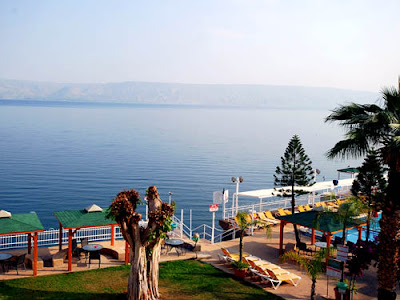
 At an altitude of some 600 meters above sea level, overlooking the Sea of Galilee (the Kinneret), lies the city of Tiberias - one of the largest cities in the north of Israel and one of its most popular resort places. Tiberias has been the cultural and religious center of the Jewish community in the Roman days, and is considered one of the holiest cities in Israel. Alongside its historical monuments Tiberias is a lively place, especially during the hot summer months with many attractions for tourists and families with kids.
Hammat Tverya National Park is a recommended way to pass a relaxing afternoon while visiting the city. Situated next to the “Hamei Tverya” spa (another great option for spa lovers), the Hammat Tverya National Park includes few old synagogues and a public bath house, including few ancient natural warm water spas. Many of Tiberias’ landmarks of ancient history are located there.
The Tiberias beaches are mostly clean and well kept, though admission fee is required. To enjoy the scenic view of the Sea of Galilee from above mixed with a nice walk, visit the Emek Hayarden boardwalk between Zemach beach and the Dganya Aleph Kibbutz. The River Jordan (Yarden River), stretching to the North and South of the Sea of Galilee, has a wide selection of rafting and kayaking spots for water sports lovers. Along the Alon boardwalk, next to the beach, you can fine three centers offering equipment and water activities such as boats hiring, water skiing and more.
When getting tired of these activities, you might want to visit one of the fine seafood and fresh fish restaurants of Tiberias. On top of the promenade’s many sea food restaurants, you can try Shimshon steak house (behind the Tiberias market) or Dex steak house, both offer great meat at sea level with cool atmosphere. The Guy restaurant (next to Panorama hotel) is another off-the-beaten-track restaurant, serving kosher Jewish food from around the globe.
There are many hotels in Tiberias, some of which are luxurious and some are less pricey and more common. The best hotels in Tiberias include Caesar Resort Hotel, the Scots Hotel, the Sheraton and Rimonim Galei Kinnereth, all located next to the shore and offer 5 star facilities. Other good options while searching for hotels in Tiberias are the Holiday Inn, the Golden Tulip and Golan hotel, which is a simpler yet clean option and offers great views of the Sea of Galilee.


 Safed (Tsfat - Tzfat) - City Guide
 is a city in the Galilee region of Israel, and is one of the oldest centers for Jewish learning and spirituality, home to the Kabbalah movement which is popular with celebreties.
Located at an altitude of 900 meters (2,953 ft), Safed, is the highest city in the Galilee and of Israel. Due to its high altitude, Safed, experiences pleasantly warm summers and cold, and often snowy winters
It is the birthplace of the Kabbalah, and one of the main bastions for Torah study and the like during the centuries of Ottoman rule. It is one of the four holiest cities in Judaism, along with Hebron, Tiberias, and of course Jerusalem. While there are many stories about when it was founded, and by whom, it truly grew to prominence in the late 15th century when it became a refuge for Jews fleeing the Spanish Inquisition.
It is a cute, quaint city in the north of Israel. In more recent times, thanks to its beautiful setting surrounded by pine forests, and its agreeable, mild summers, Safed has developed into a summer holiday resort much frequented by Israelis and also foreign visitors. It has also become popular as an artists' colony apart from its religious significance, its nature and its pleasant summers.
See in Safed:
Synagogues - there are a number of old, beautiful, and unique synagogues in Tsfat, some of them rather famous world-wide among the Jewish community. These include:
* The Ari Ashkenaz and the Ari Sephard synagogues both in memory of Rabbi Isaac Luria. The Ari Ashkenaz is normally open for visitors on weekdays and boasts an ornate ark. The Ari Sephard synagogue is only open for prayers on the Sabbath.
* The "Abuhav" synagogue is probably the most unique, most beautiful, and most famous. It was built in the 1490's according to Kabbalistic architectural and spiritual beliefs.
* The "Caro" synagogue is another popular landmark, established in the 16th century on the site of a yeshiva run by one of the chief rabbis of Tsfat, and a compiler of the Shulchan Aruch, a book of Jewish law.
Both of these synagogues follow Sephardic traditions, and both, along with all the synagogues in Tsfat, and most around the country and the world, expect all visitors to be dressed appropriately; this means one must have legs covered (no shorts or short skirts), no bare shoulders/upper arms, and all men must cover their heads.
The Ancient Cemetery is the burial place of many famous Rabbis and is a common destination for visitors to Tsfat looking for answers to their prayers. Some famous Jewish personalities buried there include:
* The Arizal (Rabbi Isaac Luria), the famous kabbalist of the 16th century.
* Rabbi Joseph Karo, the author of the Shulchan Aruch, the definitive code of Jewish Law.
* Rabbi Moshe Cordevero (the Ramak), a famous kabbalist redating the Arizal.
* Chana and her seven sons, the martyred family from the time of the Temple.
Some other places to see in Tsfat that shouldn't be missed:
* Tzaddik Educational Visitor's Center featuring the Third Temple Model Exhibit and Multi-Media Presentation
* Great Breslov Synagogue
* Meiri Museum for Safed History
* Printing Press Museum
* Artist colony in the Old City
* Biblical Museum in the Fortress Garden
* Statue Garden and the Gallery of sculptor Moshe Ziffer
* The sephardic Ari Synagogue
* The Ari mikve
* The city also boasts a growing number of small, private art galleries, many of which have little cafes or tourist shops attached, selling postcards, t-shirts, and other basic tourist goods.
* Livnot U'Lehibanot, Rehov Alkabetz 17, ☎ (050)8939-042, [5]. Most tourists try to stop in the Tzfat Tourist Information Center for their first overview of Tzfat. The Center provides maps and guidebooks as well as information about tour guides, accommodations, and other information for Tzfat. There is a 10-minute movie that gives an overview of the History of Tzfat, as well as 800-year-old antiquities which, now uncovered, offer visitors an opportunity to see the original rooms and buildings of Tzfat of the 1300s and 1400s, which have been excavated by the Livnot U'Lehibanot Israel Experience Program.


Sites For Visit:
* Banias – Caesarea Philippi
* Sea of Galilee
* The Jordan River
* Capernaum
* St. Peter’s House
* Tabha
* Church of the Multiplication
* Basilica of Annunciation
* St Peter’s Primacy
* The Mount of Beatitudes
* Korazim
* Bethsaida
* Kursi
* Nof Ginossar
* Magdala
* Cana
* Nazareth
* St. Gabriel Church
* Church of St. Joseph
* Synagogue Church
* Precipice Mountain
* Mount Tabor
* Church of the Transfiguration
* Megiddo
 You might also like to read:
http://holylandandjudaism.blogspot.com/2010/07/israels-tourism-golan-heights-hermon.html
http://holylandandjudaism.blogspot.com/2010/07/israels-tourism-coastal-plain.html
http://holylandandjudaism.blogspot.com/2010/07/israels-tourism-netanya-in-picture.html
http://holylandandjudaism.blogspot.com/2010/07/israels-tourism-jerusalem.html
http://holylandandjudaism.blogspot.com/2010/07/israels-tourism-west-galilee.html
http://holylandandjudaism.blogspot.com/2010/07/israels-tourism-tel-aviv-jaffa.html
http://holylandandjudaism.blogspot.com/2010/07/israel-tourism-negev.html
http://holylandandjudaism.blogspot.com/2010/07/for-first-time-main-road-of-jerusalem.html
http://holylandandjudaism.blogspot.com/2010/07/holy-sites-for-christians-in-israel.html
http://holylandandjudaism.blogspot.com/2010/07/1800-years-old-high-level-aqueduct-of.html

 This city's name is spelled so many different ways -- Tzefiya (in the Talmud), Safad, Zefat, Sefad -- it's easy to get confused and think they are entirely different places. Regardless, if you see any of these on your itinerary, it's a place you'll want to visit.